

Why International Tax Travel Issues Matter for Business Travelers
Business trips across borders are no longer the exception but the norm. A sales director flying from Frankfurt to Singapore for a three-day conference or a digital nomad coding from a coworking space in Medellín for six months both trigger the same question. Which country gets to tax the income earned during that stay. The answer is rarely simple. Tax treaties, local definitions of tax residency, and even the number of days spent in a country can shift the liability overnight. Ignoring these rules does not make them disappear. It turns a routine expense report into a compliance nightmare that can cost thousands in penalties, double taxation, or missed deductions.
Consider a German software engineer who spends 183 days in Portugal under the Non-Habitual Resident regime. On day 184, Portugal considers her a tax resident, retroactively taxing her worldwide income for the entire year. Meanwhile, Germany still expects its share because she maintains a home and family there. Without advance planning, she faces two tax returns, two sets of deadlines, and two bills for the same paycheck. This scenario plays out daily for consultants, remote workers, and executives whose travel schedules cross multiple jurisdictions in a single quarter.
How Local Tourism Taxes Hit Business Travel Budgets
Tourism taxes were originally designed for leisure visitors, but business travelers now pay them too. Cities like Barcelona, Venice, and Amsterdam impose daily levies on hotel stays, airport arrivals, or even short-term rentals. In 2024, Barcelona raised its cruise passenger tax to €7 per person, while Venice introduced a €5 entry fee for day visitors. These charges add up quickly for a sales team of five staying four nights at a downtown hotel. The €20 per night city tax in Amsterdam becomes €400 for the group, a line item that finance departments often overlook when approving travel budgets.
The problem is not just the cost but the lack of transparency. Many booking platforms bury the tax in the final invoice, so travelers only discover the extra charge at checkout. Some cities, like Paris, exempt business travelers if they can prove the trip is work-related. However, the proof usually requires a letter from the employer on company letterhead, a step most travelers skip. Without that documentation, the tax applies automatically, inflating the trip cost by 5 to 10 percent. Companies that fail to track these taxes miss opportunities to reclaim them as deductible business expenses, turning a small oversight into a recurring financial leak.
Tax Residency Traps for Remote Workers and Digital Nomads
Remote work policies have turned employees into unintentional tax nomads. A U.S. marketing manager who spends three months in Spain, two in Mexico, and one in Thailand may trigger tax residency in all three countries without realizing it. Spain uses a 183-day rule, Mexico counts physical presence, and Thailand looks at economic ties. Each country defines residency differently, and the thresholds are often lower than travelers expect. A single week over the limit can create a tax obligation that lasts the entire year, even if the worker returns home afterward.
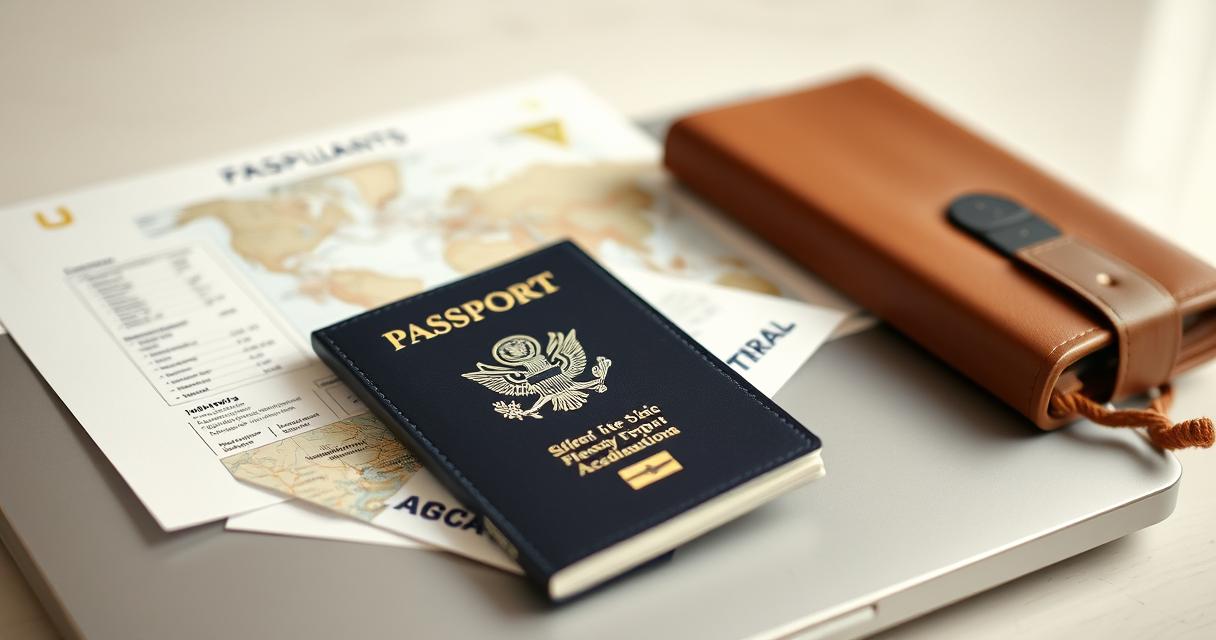
The consequences extend beyond personal tax returns. Employers can face payroll withholding requirements in multiple countries, forcing them to register local entities or use employer-of-record services. A Canadian tech company discovered this the hard way when an employee worked from Costa Rica for four months. Costa Rican tax authorities demanded payroll taxes for the entire period, plus penalties for late filing. The company had to hire a local accountant, set up a temporary entity, and pay back taxes before the employee could leave the country. These cases are becoming more common as remote work policies expand, yet most HR departments still treat international travel as a logistical issue rather than a tax compliance risk.
Corporate Tax Risks from Short-Term Business Travel
Even brief business trips can create permanent establishment risk for companies. A U.S. consulting firm sending an employee to London for a two-week project might assume no tax liability exists. However, if that employee signs contracts or negotiates deals on behalf of the company, the UK tax authority could argue that a taxable presence was created. This triggers corporate tax obligations, VAT registration, and payroll withholding requirements. The threshold for permanent establishment is lower than most executives realize. Some countries, like France, consider a single employee working remotely for more than 30 days a taxable presence, regardless of whether the company has an office there.
The financial impact is significant. A German manufacturing company faced a €250,000 corporate tax bill after sending a team to Italy for a six-week installation project. Italian tax authorities ruled that the team’s activities constituted a permanent establishment, even though the company had no local entity. The bill included back taxes, interest, and penalties, all because the travel policy did not include a tax risk assessment. Companies can mitigate this risk by limiting employee activities in high-risk countries, using local contractors instead of employees, or structuring contracts to avoid creating a taxable presence. However, these strategies require advance planning and coordination between legal, tax, and travel departments.
Double Taxation and How to Avoid It
Double taxation occurs when two countries claim the right to tax the same income. A U.S. citizen working remotely from Portugal might owe U.S. federal tax on her salary while Portugal taxes her worldwide income under its Non-Habitual Resident regime. Without a tax treaty, she pays twice on the same earnings. Most countries have bilateral tax treaties that prevent this, but the treaties often contain complex tie-breaker rules. For example, the U.S.-Portugal treaty uses a four-step test to determine which country has primary taxing rights. The test considers permanent home, center of vital interests, habitual abode, and citizenship. If the tie-breaker favors Portugal, the U.S. still taxes the income but allows a foreign tax credit for the amount paid to Portugal.
The process of claiming these credits is not automatic. Taxpayers must file additional forms, such as the U.S. Form 1116 or the UK’s Foreign Tax Credit Relief claim. Missing a deadline or miscalculating the credit can result in double taxation. A British expat in Dubai learned this when he failed to file his UK tax return on time. The UK tax authority denied his foreign tax credit, forcing him to pay UK tax on income already taxed in the UAE. The error cost him £18,000 in additional tax and penalties. Companies can help employees avoid this by providing tax equalization policies, which reimburse employees for any additional tax burden caused by international assignments.
VAT and Sales Tax Pitfalls for Business Travelers
Value-added tax and sales tax rules vary wildly between countries, and business travelers often overlook them. A U.S. company sending employees to a trade show in Germany must register for German VAT if it exceeds the annual threshold of €22,000 in taxable supplies. Even small expenses, like hotel stays or conference fees, can trigger this requirement. Many countries, including the UK and Australia, have simplified VAT schemes for non-resident businesses, but the registration process still requires local tax advice. A U.S. software company faced a €50,000 VAT bill after sending a team to a Berlin conference. The company assumed its U.S. VAT exemption applied, but German tax authorities disagreed, arguing that the conference fees constituted a taxable service.

Recovering VAT is another challenge. The EU allows businesses to reclaim VAT paid on business expenses, but the process is cumbersome. Companies must submit original invoices, proof of payment, and detailed expense reports to each country’s tax authority. The UK, for example, requires a separate claim for each quarter, and the refund can take up to six months. Many businesses skip this step because the paperwork outweighs the potential refund. However, for companies with frequent international travel, the savings can be substantial. A multinational corporation recovered over €300,000 in VAT last year by centralizing its reclaim process through a third-party provider. The key is to track all expenses, keep original receipts, and file claims promptly to avoid missing deadlines.
How to Build a Tax-Compliant Business Travel Policy
A tax-compliant travel policy starts with clear rules on trip duration and purpose. Companies should set a maximum number of days employees can spend in a country without triggering tax residency. For example, a 90-day limit in any 12-month period aligns with the thresholds used by many countries. The policy should also define what constitutes a business trip. A week-long conference qualifies, but a month-long stay to explore a new market might not. HR and finance teams need to collaborate on these definitions to ensure consistency. A global tech firm reduced its tax exposure by 40 percent after implementing a policy that required tax risk assessments for any trip exceeding 30 days.
The policy should also address documentation requirements. Employees must keep records of their travel dates, purpose, and expenses. Companies can use travel management software to track this data automatically. For example, a U.S. pharmaceutical company integrated its expense system with its travel booking tool to flag trips that exceed the 90-day limit. The system sends an alert to the tax department, which then assesses the risk and takes appropriate action. Training is another critical component. Employees need to understand the tax implications of their travel, especially if they work remotely from different countries. A quarterly webinar or a dedicated intranet page can help keep everyone informed. Finally, the policy should include a process for handling tax notices. If an employee receives a tax bill from a foreign country, the company should have a designated contact to resolve the issue quickly and minimize penalties.

I love spotting the intersection between business strategy and travel experiences. When I’m not planning my next trip, I enjoy writing about how entrepreneurs can turn journeys into growth opportunities.